


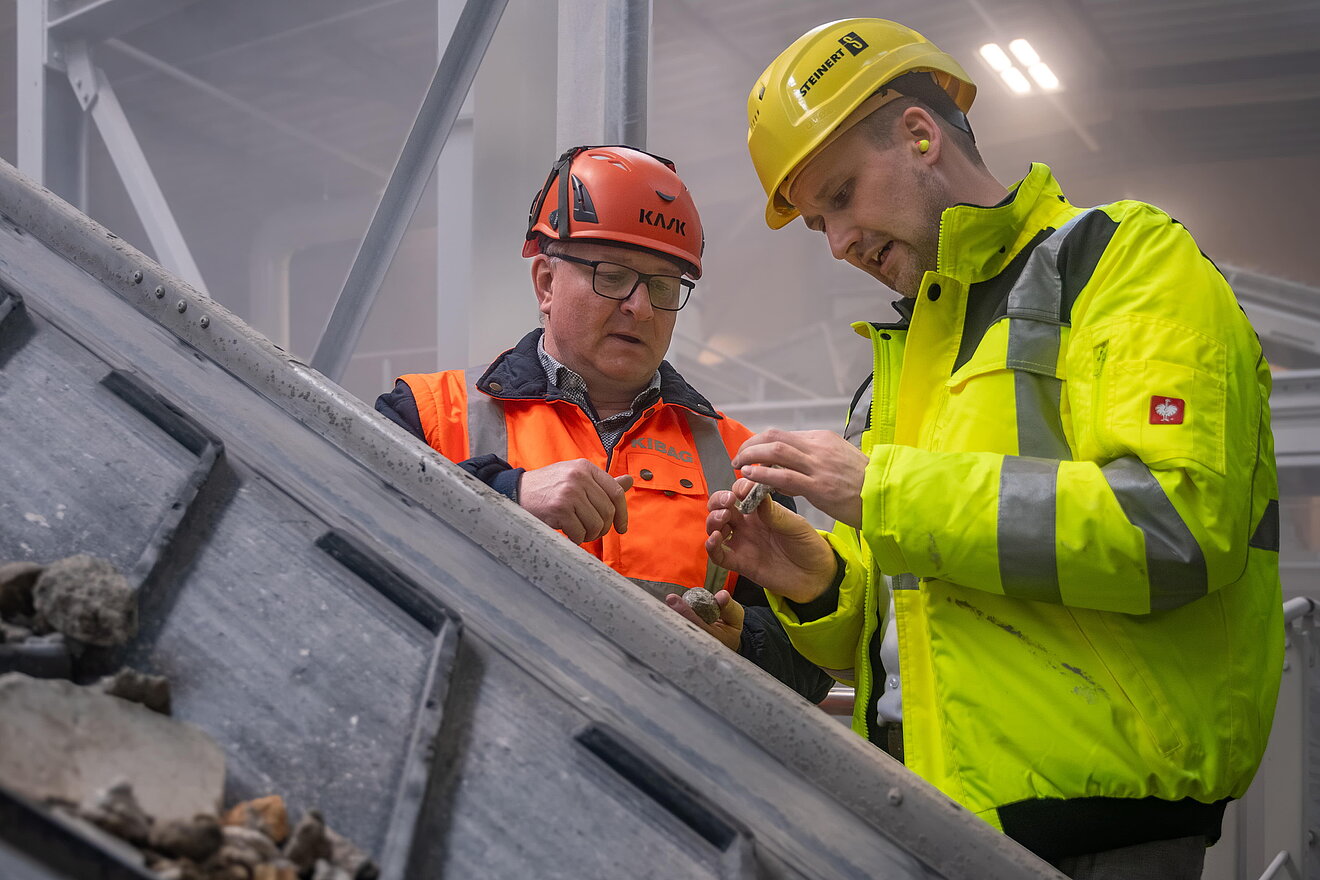




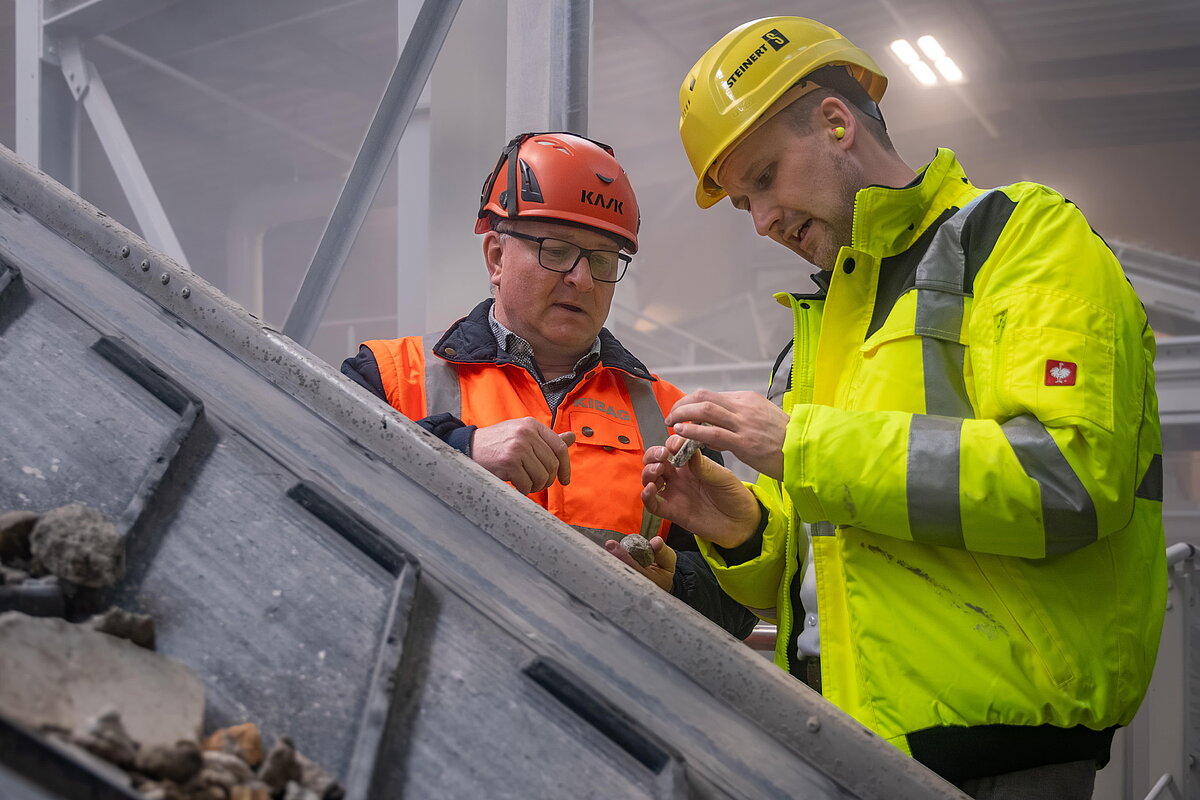

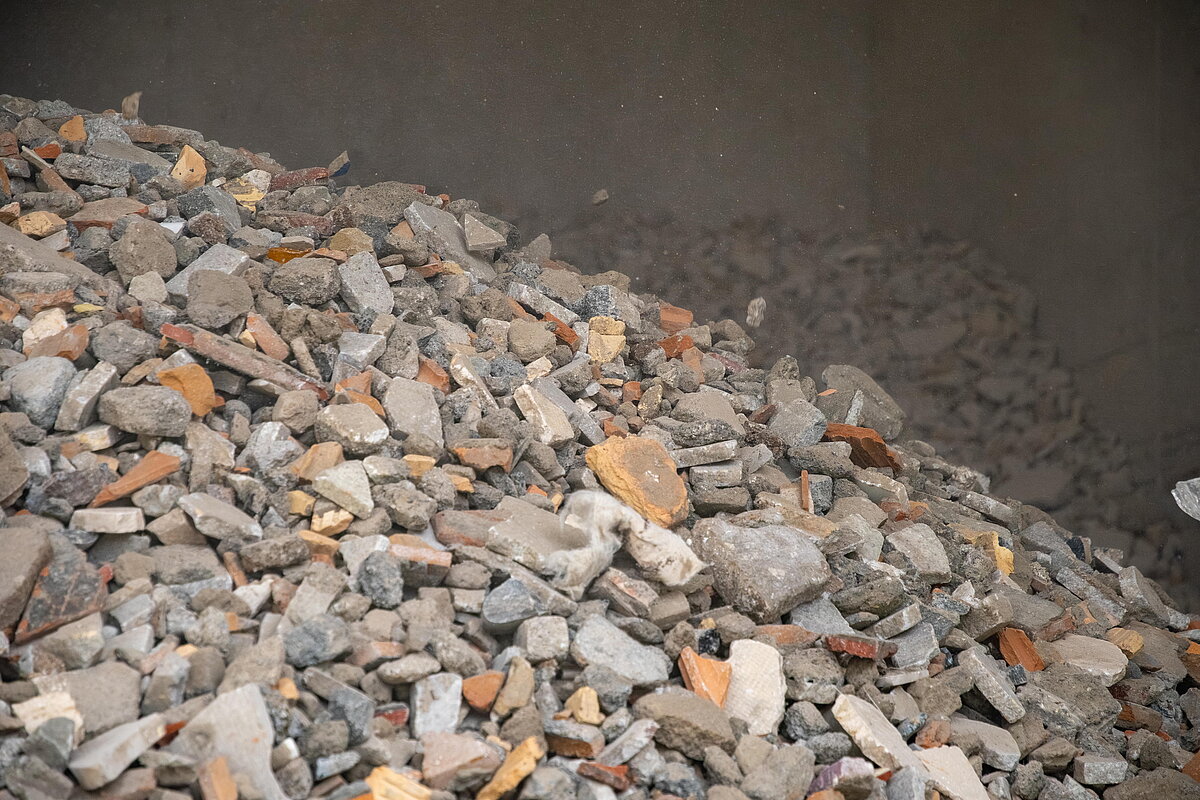


If the sorted material goes straight into production, there is a chance for contamination to go with it! Whatever makes it through the initial sorting process ends up in the product and this makes the quality requirements placed on SORTAG particularly specific: the facility must sort the mineral fraction in such a way that it meets the standards for RC concrete, which in Switzerland are among the strictest in the world.
This is exactly what happens at SORTAG in Rümlang near Zurich. SORTAG is part of the KIBAG Group and is one of the largest producers of building materials in Switzerland, operating 25 concrete plants and covering the entire building materials cycle: from construction projects to dismantling and recycling, right back to its own concrete production. The facility sorts 35 000 to 40 000 tons of mixed demolition waste and bulky goods every year. The goal: recycled mineral aggregates that meet the requirements of Swiss concrete standards. No downcycling to road base, but material that flows back into the Group's own concrete production.
"KIBAG is a very large concrete producer and so we need RC [editor's note: recycled] building materials," says Benjamin Rickli, Head of Waste Management at KIBAG and SORTAG. “SORTAG can deliver this in perfect quality.”
What goes in and what has to come out
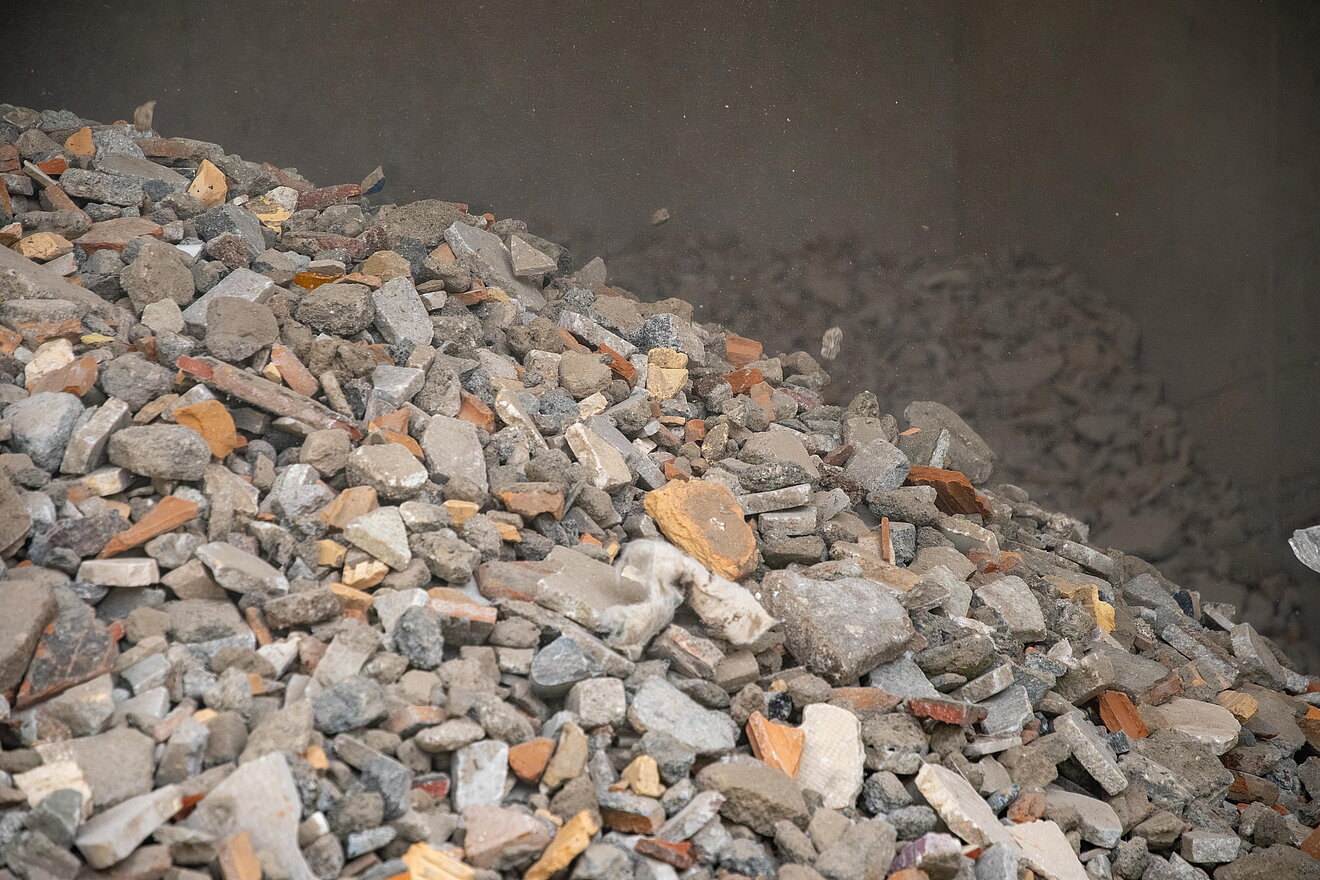
The input material is a mixture of minerals, wood, plastics, insulation, composite materials, steel, scrap and non-ferrous metals. This must result in a mineral fraction with a purity of around 98 per cent. Metals are comparatively easy to separate. The real problem goes much deeper: plaster.
Plaster is used in almost every building, as plaster or drywall. It's everywhere in demolition waste. It has a similar density to concrete and bricks, it cannot be separated by windsifting and when crushed, it disintegrates into fine grains, which are distributed in the mineral fraction. Gypsum triggers sulphate reactions in concrete, which damage the material in the long term. The Swiss standards are correspondingly strict: the maximum impurity content in concrete granulate is 0.3 per cent by mass.
"The RC components used to be mixed with plaster," says Rickli. "But today, we can say that: we are plaster-free."
But plaster is not the only issue. The composition of demolition waste fluctuates depending on the season, construction activity and demolition project. What is primarily concrete demolition today may be mixed demolition with a high proportion of wood and insulation tomorrow. A sorting facility that is only optimised for one problem has limitations.
Six machines, one flexible sorting concept
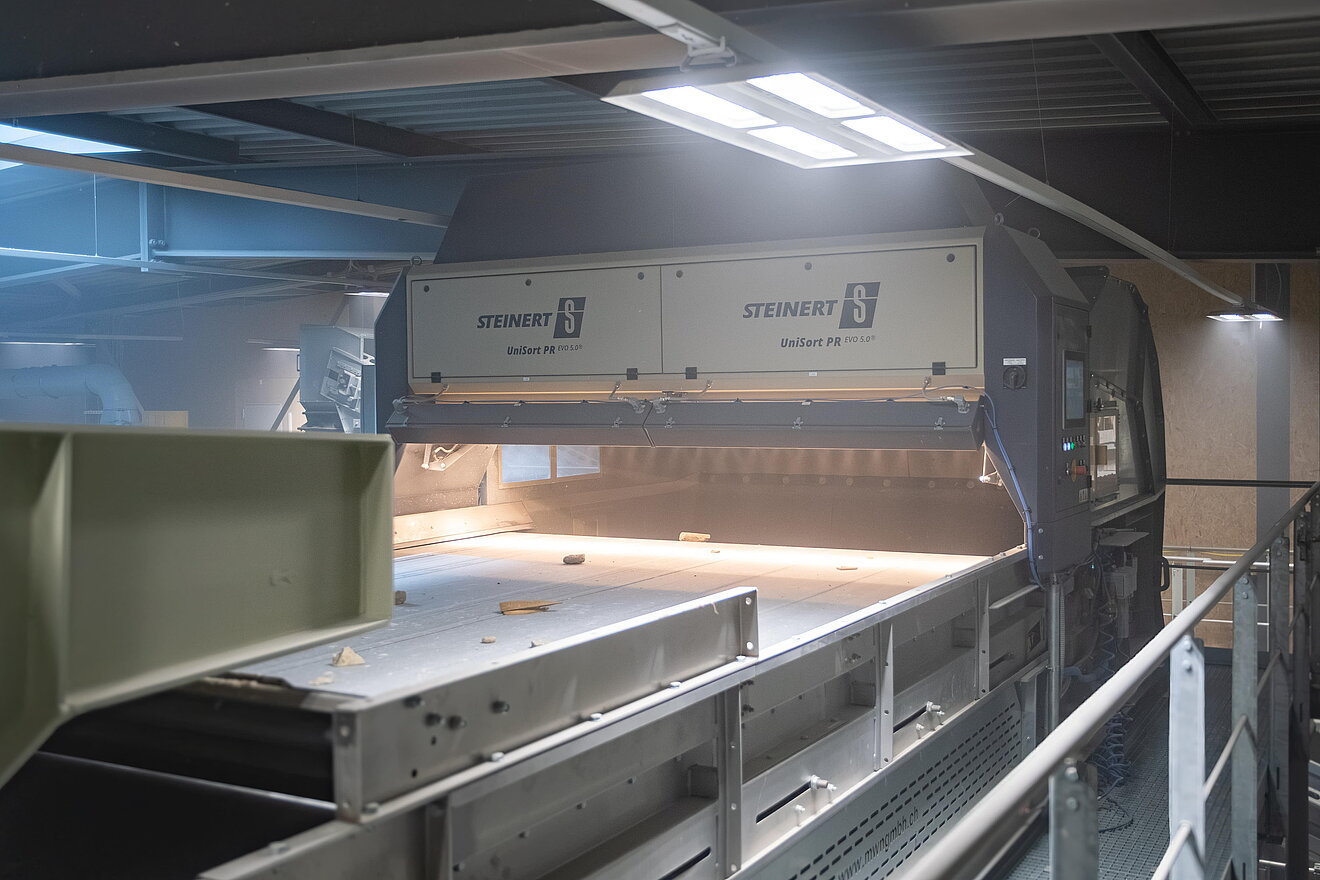
SORTAG relies on an integrated sorting concept from STEINERT that combines magnetic separation and sensor-based sorting in a single process. Six STEINERT machines cover the entire sorting process.
After mechanical pre-sorting and screening according to particle size, metal separation begins. A STEINERT UME self-cleaning overhead suspension magnet and STEINERT MOR magnetic pulley draw the ferrous metals out of the flow, STEINERT EddyC separates non-ferrous metals. This means that the metals are removed and the downstream processing systems are protected.
In the next step, UniSort PR EVO 5.0 sorts using near infrared technology. It separates wood, plastics and other non-mineral components from the minerals. UniSort PR EVO 5.0 works with a hyperspectral NIR camera, which makes detection more reliable even with complicated materials.
The decisive step is taken by two STEINERT KSS XT | CLI combination sensor sorting machines. They combine camera, laser, induction and X-ray technology and bring the mineral fraction to its final purity. This is where the plaster is sorted out and impurities are recognised that other individual sensors alone cannot reliably identify. The combination of several sensors in one machine is also the reason why the facility can be flexible and quickly react to changing input compositions without having to replace hardware.
"The focus is clearly on product quality," says Rickli. “And so we have a good product at the end of the day.”
Concrete demolition today, mixed demolition tomorrow
Rickli describes day-to-day operations in sober terms: "We basically have two to three standard programmes with which we can sort throughout the day and produce consistently good quality. In special cases, STEINERT's sorting technology can be used to change waste streams and sort out other products."
That may not sound very exciting, but it makes a difference in practice. Most C&D sorting facilities are calibrated to a specific material flow. If the composition changes, the sorting quality drops or manual reworking is required. With SORTAG, the sorting programme can be adapted. Rickli sees this as a concrete advantage over what was previously possible: “That's the flexibility we didn't have before, but we do today.”
Swiss level, international problem
Switzerland is one of the countries with the strictest requirements for recycled building materials. The SIA 2030 and the FOEN directive define precise limit values, public clients are increasingly demanding RC concrete and monitoring the quality accordingly. At the same time, landfill space is becoming scarcer and more expensive, and natural gravel reserves are dwindling.
"Globally, we see ourselves in a pioneering position," says Rickli. "Because Switzerland has a very high standard of concrete. And it simply needs top quality, otherwise it can no longer be sold."
The plaster problem is not an issue specific to Switzerland. The European standard EN 206 limits the sulphate content in recycled aggregates to 0.2 per cent. Studies from Belgium, France and Canada show that most industrially available recycled aggregates exceed this value. Plaster cannot be reliably separated using conventional mechanical sorting because its density is too similar to that of concrete and brick. This makes sensor-based sorting relevant for any operator who wants to produce mineral fractions for bonded applications.
"In the end, it's always about the output fraction and its quality," says Rickli. “That's the be-all and end-all."